info@paramounttrek.com
+977-9856012294
Registration no: 398902/83/84
Tourism Licence No: 507
Destination
Nepal
Accommodation
Community Teahouse, Local Lodge & Homestay
Walking Distance
80.5 km approx
Duration
7 Nights 8 Days
Max. Elevation
4,660 m (15,288 ft) at Khayer Lake
Meals Included
Breakfast, Lunch, and Dinner
Best Season
Spring (Mar–May), Autumn (Sep–Nov)
Grade
Strenuous
The Three Peaks Trek from Pokhara is an 8-day high-ridge circuit through the western Annapurna region that strings together four of the area's finest panoramic viewpoints — Mulde View Point, Khopra Danda, Poon Hill, and Mohare Danda — into a single, uninterrupted mountain traverse. Rather than an out-and-back trail to one destination, this route is built as a complete loop through oak and rhododendron forest, alpine meadow, and sacred high-altitude terrain, culminating in a demanding side trip to the glacial waters of Khayer Lake (4,660 m), tucked directly beneath the towering south face of Annapurna.
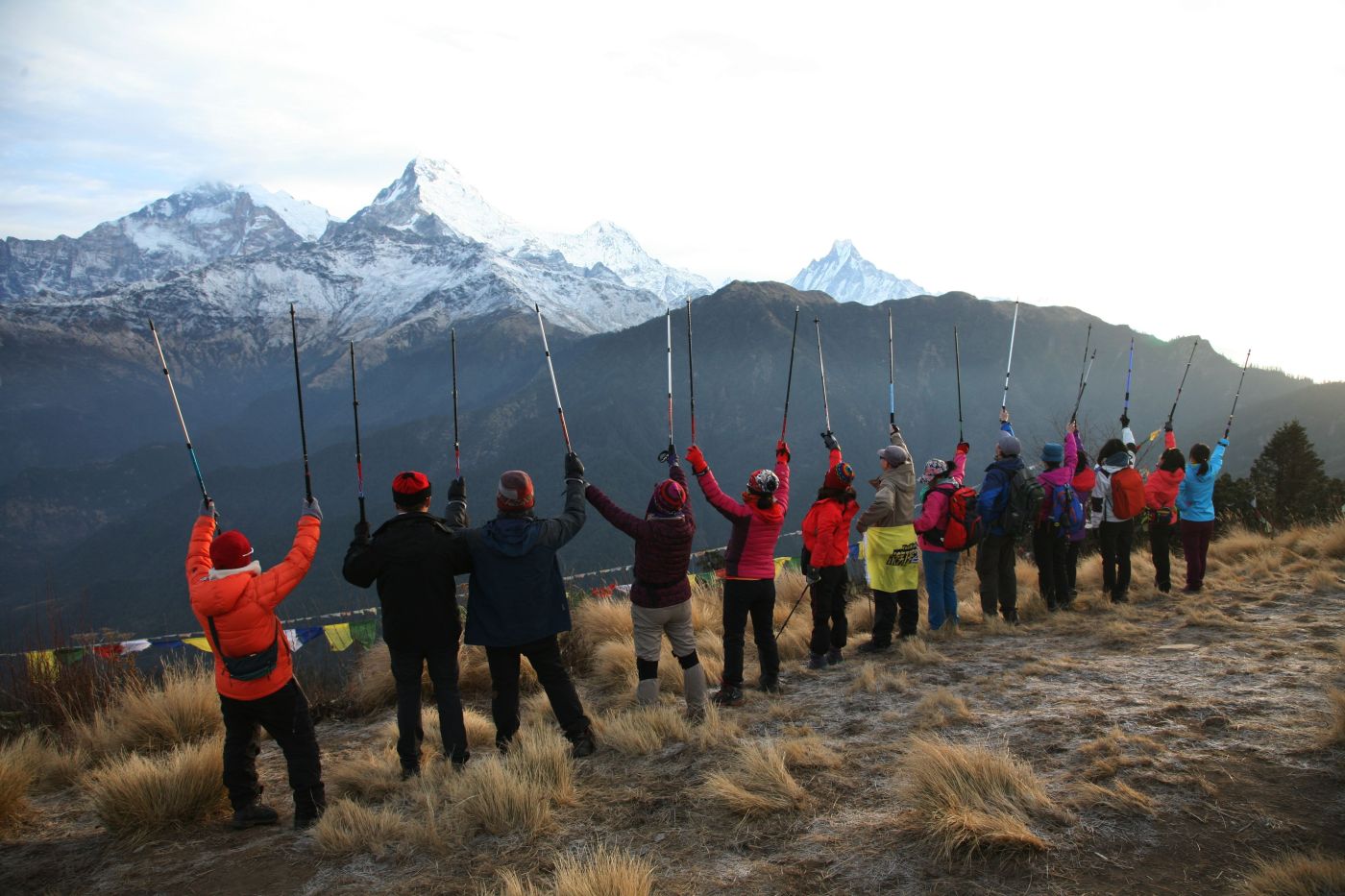
Along the way, trekkers get sustained, front-row views of two of the world's 8,000-meter giants — Dhaulagiri I (8,167 m) and Annapurna I (8,091 m) — alongside Annapurna South (7,219 m), Nilgiri South (6,839 m), Hiunchuli (6,441 m), and the sacred fishtail summit of Machhapuchhre (6,993 m). Add in genuine Gurung and Magar village culture at Ghandruk, Swanta, and Ghorepani, and this trek delivers one of the most complete high-altitude experiences accessible from Pokhara without requiring a multi-week commitment.
If you're searching for a trek near Pokhara that combines four summit-style viewpoints, an 8,000m mountain backdrop, and a genuine sacred lake excursion in one 8-day package, the Three Peaks Trek is built exactly for that.
Autumn (September – November): The most reliable season for this trek. Post-monsoon skies are sharp and clear, daytime temperatures sit comfortably between 10°C and 18°C, and visibility toward Khayer Lake and the high ridgelines is at its best all year.
Spring (March – May): Forest sections come alive with red, pink, and white rhododendron blooms. Days are warm, wildlife activity picks up across the mid-elevation woodlands, and mountain views remain strong.
Winter (December – February): Crisp, clear blue skies are common, but severe cold and heavy snowfall can block the high pass toward Khayer Lake, and ridge temperatures routinely fall below freezing — plan for a possible detour if the pass is closed.
Monsoon (June – August): Green, waterfall-heavy landscapes, but trails turn wet, leech-prone, and slippery, with cloud cover frequently blocking Himalayan views — not the recommended window for this route.


Pokhara → Birethanti → Ghandruk → Tadapani
A private 4WD jeep collects us in Pokhara after breakfast and heads west, passing through the trailhead town of Birethanti before climbing the road to Ghandruk. The drive takes about three hours, and the lakeside city shrinks behind us as the hills steepen.
Ghandruk is a Gurung village of slate roofs and stone-paved lanes, and we wander its alleys before the walking begins. From here the trail becomes a long stone staircase, rising through oak and rhododendron forest where moss hangs from the branches and the air cools with every landing.
Langur monkeys and forest birds are a real possibility on this stretch, so we keep the pace easy and watch the canopy.
By afternoon the trees thin out and we step onto the ridge at Tadapani, where the first full Annapurna skyline opens ahead. We settle into the teahouse, drink something hot and turn in early, with the serious climbing still to come.
Tadapani → Isharu → Deurali Pass → Dobato
The morning on the ridge starts with a quiet turn away from the crowds. After breakfast in Tadapani, we leave the main Annapurna Sanctuary route and follow a narrower, moss-draped forest trail toward Isharu and Deurali Pass.
The path holds to the ridgeline for most of the day, climbing steadily through rhododendron and pine. Few other groups share this trail, and the forest feels older and damper the higher we go. The altitude sets our pace more than the clock does.
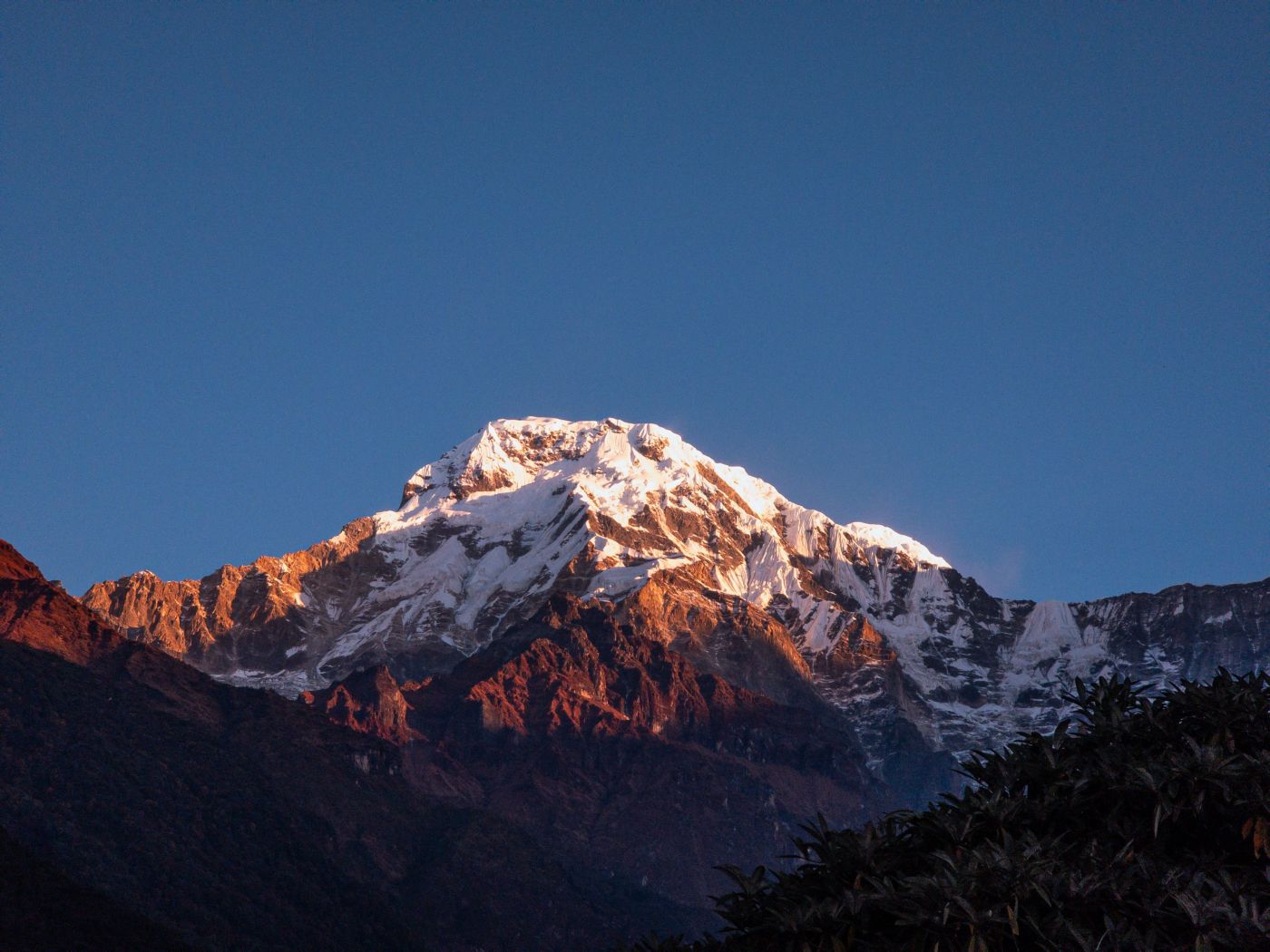
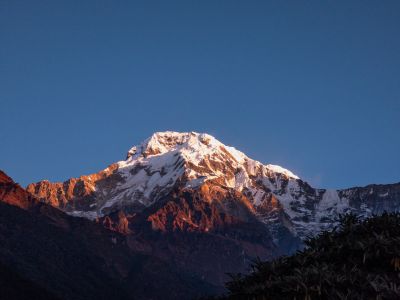
The change comes late in the day, when the trees fall back and the alpine pastures of Dobato open out. Directly across the valley stands Annapurna South, close enough that its ridges and snow bands are easy to read in the afternoon light.
We reach Dobato after five to six hours on the trail. With the climbing done, we rest, drink plenty of fluids and let our bodies adjust to the height. Tomorrow starts well before sunrise.
Dobato → Mulde View Point → Dobato → Bayeli Kharka → Upper Chistibung → Khopra Ridge
Headlamps on and breakfast still hours away, we begin with a 45-minute climb from Dobato to Mulde View Point. We reach the top in the dark and wait for the light.
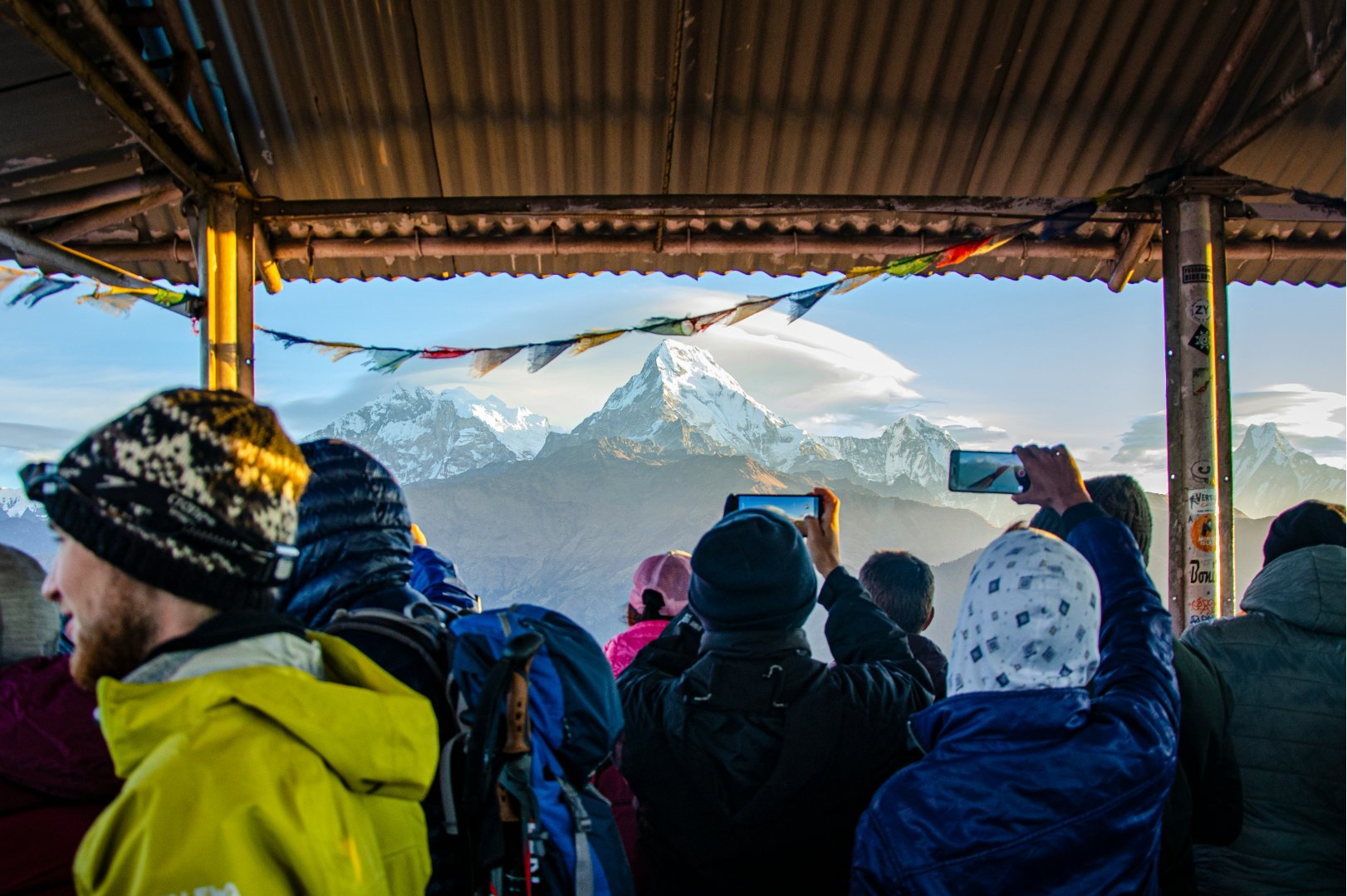
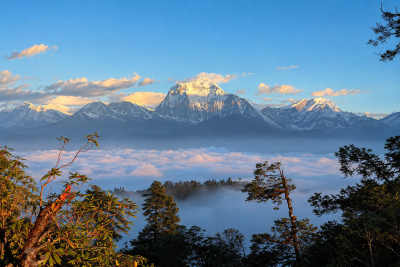
When it comes, the sunrise sweeps across Dhaulagiri, Annapurna and Machhapuchhre (Fishtail), each summit catching fire in turn. We then walk back down to Dobato for a hot breakfast.
With full stomachs, we drop through forest to Bayeli Kharka and on to the pastures of Upper Chistibung, giving up height before the day's real effort. From there the trail climbs steadily above the treeline, where trees give way to grass and scrub and the wind picks up.
The path tops out on the crest of Khopra Ridge, a long, open spine with views toward the Kali Gandaki gorge. We check into the community-run eco-lodge, layer up against the cold and watch the evening colour settle over the range.
Khopra Ridge → Khayer Lake → Khopra Ridge
Today we walk light. After an early breakfast on Khopra Ridge, we set out for Khayer Lake with day packs only, following an exposed ridge trail that stays high and open for hours. Wind, thin air and long views define the route. A seasonal tea stop may be open along the way .
The climb steepens toward the end, and then the glacial basin comes into view. Khayer Lake is dedicated to Khayer Barahi and sits beneath the wall of Annapurna South. It is the highest point of the entire trek, and the silence up here is unlike anything else on the route. We stay long enough to take it in and eat lunch before turning back.
We retrace our steps to the ridge, tired but pleased. The round trip runs seven to nine hours, so the lodge's warmth is welcome when we arrive.
Anyone who feels unwell or simply drained can swap the lake for a rest day on the ridge. It works well as an acclimatization day and a chance to watch the weather over the gorge.
Khopra Ridge → Upper Chistibung → Swanta
The long descent starts right after breakfast. We leave Khopra Ridge and drop across alpine meadow toward Upper Chistibung, then into bamboo forest. Height disappears quickly, and trekking poles earn their keep on the steeper sections.
Below the bamboo, oak forest takes over, then farmland and terraced fields. We cross streams on timber bridges, and the air warms and thickens with every switchback.
The contrast is the highlight of the day. We go from a wind-scoured ridge to the green terraces of the Magar settlement of Swanta, losing about 1,460 m in roughly nine kilometres. It feels like walking into a different country.
Swanta is quiet and unhurried. We arrive in the afternoon, with time to stroll the lanes, stretch our legs and sleep more easily at this lower altitude.
Swanta → Chitre → Ghorepani
A stream crossing opens the day. From Swanta we cross a local stream and begin climbing through terraced farmland, passing through the village of Chitre along the way.
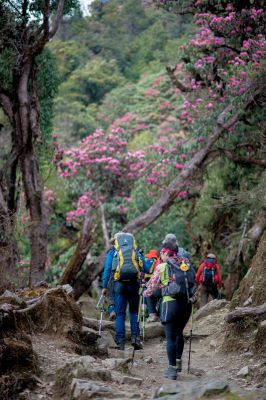
Higher up, we rejoin the main stone-paved trail and enter a dense rhododendron canopy. In spring it burns red, pink and white overhead. The climb is steady rather than steep, a gentler rhythm after the descent and the high ridge.
The surprise comes at the top. After days of near-solitude, Ghorepani is a busy mountain hub, its lodges lined along the ridge and full of trekkers on the classic Poon Hill route. The shift in mood is the highlight of the day.
We reach Ghorepani in the afternoon, with time to rest, warm up and enjoy a good dinner. We turn in early, because tomorrow begins in the dark.
Ghorepani → Poon Hill → Ghorepani → Mohare Danda
Poon Hill comes before breakfast. Stone steps lead up from Ghorepani in the dark, and we reach the summit in time for first light over the Annapurna and Dhaulagiri ranges.
We drop back to Ghorepani for breakfast, then leave the busy main trail behind. A quieter ridge path carries us across open alpine pastureland, with long views on both sides. The crowds disappear within an hour.
The day ends at Mohare Danda, a peaceful community-run lodge on a high, open ridge. With the walking finished by midday, we spend the afternoon resting and waiting for the evening light.
The long sweep of the Himalayan skyline from here makes a fitting last night on the mountain.
Mohare Danda → Kokhe → Banthanti → Pokhara (by jeep)
Our last morning begins on the ridge at Mohare Danda, with a final look at the mountains before we shoulder our packs and start down.
The descent runs through forest, and the altitude falls away quickly. We pass through Kokhe and keep dropping toward Banthanti, where the trail meets the road. It is a long downhill, hard on the knees, so we take it steadily and use poles where the steps are steep.
Our jeep is waiting at Banthanti. We share a last cup of tea with our guide, say goodbye to the trail, and settle in for the three-hour drive back to Pokhara.
We arrive in the city with the trek complete: four viewpoints, one sacred lake and eight days of ridge walking behind us.
|
Days |
Route |
Distance |
Walking Time |
Altitude |
|
Day 1 |
Pokhara to Ghandruk (Drive) ➔ Tadapani |
7.5 km |
3 – 4 hrs |
2,630 m |
|
Day 2 |
Tadapani to Dobato |
8.5 km |
5 – 6 hrs |
3,350 m |
|
Day 3 |
Dobato to Khopra Ridge (via Mulde View Point) |
10 km |
5 – 6 hrs |
3,660 m (Mulde: 3,637 m) |
|
Day 4 |
Khopra to Khayer Lake ➔ Khopra |
15 km |
7 – 9 hrs |
3,660 m (Lake: 4,660 m) |
|
Day 5 |
Khopra Ridge to Swanta Village |
9 km |
4 – 5 hrs |
2,200 m |
|
Day 6 |
Swanta Village to Ghorepani |
9.5 km |
4 – 5 hrs |
2,860 m |
|
Day 7 |
Ghorepani to Mohare Danda (via Poon Hill) |
10 km |
5 – 6 hrs |
3,300 m (Poon Hill: 3,210 m) |
Short on time? A condensed 6-day route is available for trekkers who want the core highlights without the full 8-day commitment. This version takes a private 4WD jeep directly to Ghandruk on Day 1, skips the Khayer Lake side hike on Day 4 (or exits via a jeep pickup directly from Swanta/Ulleri), and still covers Mulde View Point, Khopra Ridge, Poon Hill, and Mohare Danda in full.
Change the duration, add experiences, choose your preferred accommodation, or create a completely private journey.
Let's Plan TogetherTransportation
Accommodation
Food & Meals
Guide & Porter
Permits & Fees
Medical / Safety Assistance
Equipment
Other Included Services
Transportation
Accommodation
Food & Meals
Guide & Porter
Permits & Fees
Medical / Safety Assistance
Equipment
Other Included Services
International Flights
Nepal Visa
Travel Insurance
Personal Expenses
Beverages
Hot Showers & Charging
Wi-Fi / Internet
Tips & Gratitude
Additional Expenses
International Flights
Accommodation not Included
Meals not Included
Supporter / Porter
Travel Insurance
Tips
Other Exclusions
| Group Size | Price / Person |
|---|---|
| 1 person | USD 700 |
| 2 persons | USD 670 |
| 3 – 6 persons | USD 650 |
| 6 – 10 persons | USD 600 |
| 10 – 15 persons | USD 550 |
Trip Info & FAQs for Three Peaks Trek from Pokhara — 8 Days (Mohare, Khopra & Poon Hill)
No reviews yet. Be the first to review this package!
Only customers with a completed booking for this package can submit a review. Your review will appear here once approved.
USD 700 per person
Tier: Default
👋
Select add-ons for specific participants.
Review your booking and select a payment method.
Who should the invoice/receipt be issued to?
A 10% deposit confirms your booking — we'll send bank transfer or payment link instructions by email right after you submit.