Menu
5.0 (1 Review)
6 Day Annapurna Basecamp Trek
Trekking

6 Day Annapurna Basecamp Trek

5 Night 6 Days Nepal

Destination

Nepal

Accommodation

Teahouse

Walking Distance

Not specified

Duration

5 Night 6 Days

Max. Elevation

4,130 m (13,550 ft)

Meals Included

Not specified

Best Season

Spring (Mar–May), Autumn (Sep–Nov)

Grade

Moderate

Overview

The 6-Day Annapurna Base Camp Trek is a thrilling Himalayan adventure that takes you deep into the spectacular Annapurna Sanctuary. Starting and ending in Pokhara, this short yet rewarding trek combines beautiful mountain scenery, traditional Gurung villages, lush rhododendron forests, and dramatic Himalayan landscapes.

The journey passes through popular villages such as Chhomrong, Sinuwa, and Deurali before reaching Annapurna Base Camp (4,130 m). From the base camp, you can enjoy breathtaking views of Annapurna I, Annapurna South, Hiunchuli, Gangapurna, and Machhapuchhre (Fishtail) surrounding the sanctuary.

Despite being a short itinerary, the trek involves several hours of walking each day, including stone steps and uphill sections. It is ideal for time-constrained trekkers who still want to experience one of Nepal's most iconic Himalayan treks.

The trek is best suited for spring (March–May) and autumn (September–November), when the weather is generally clear, and mountain views are at their best.

Best Time to Visit Annapurna Base Camp

The Annapurna Base Camp Trek can be enjoyed throughout the year, but spring (March–May) and autumn (September–November) are generally considered the most favorable seasons. Each season offers a different experience, so the ideal time ultimately depends on your weather preferences, trekking experience, and expectations.

Spring Season – March to May

Spring is one of the most beautiful periods for the Annapurna Base Camp Trek. The weather is generally stable, with clear skies, comfortable daytime temperatures, and excellent mountain visibility. The trails come alive with blooming Rhododendron flowers, particularly in the lower and middle sections of the route.

Occasional snowfall can still occur at higher elevations, adding to the Himalayan scenery. The pleasant conditions make spring suitable for both first-time and experienced trekkers. Hiring a professional local guide is recommended for a safer and more informative journey.

Autumn Season – September to November

Autumn is widely regarded as the best trekking season in Nepal, and Annapurna Base Camp is no exception. Following the monsoon, the atmosphere becomes fresh and clear, providing spectacular views of the surrounding Himalayan peaks.

Days are generally dry and pleasant, while nights become cooler as you gain elevation. Autumn also offers an opportunity to experience Nepalese culture, as major festivals such as Dashain and Tihar usually fall during this period.


Summer and Monsoon Season – June to August

The summer monsoon brings frequent rainfall to the Annapurna region, particularly from June through August. Wet and slippery trails, muddy sections, and leeches at lower elevations can make the trek more demanding. Mountain views may also be limited by clouds and rain.

However, the monsoon season has its own appeal. The landscape becomes exceptionally green, waterfalls are more active, and wildflowers add color to the hills. The quieter trails can also be attractive to experienced trekkers who prefer a more peaceful journey.

Winter Season – December to February

Winter brings cold temperatures and snowfall to the higher sections of the Annapurna Base Camp route. From mid-December to February, heavy snow can occasionally make some parts of the trail more difficult and affect access to higher elevations.

For trekkers seeking solitude and snowy Himalayan landscapes, winter can still be rewarding, but proper preparation is essential. A qualified guide, suitable winter clothing, travel insurance with emergency evacuation coverage, and appropriate trekking equipment are strongly recommended.

Which Season Is Best for Annapurna Base Camp?

For the best combination of stable weather, clear mountain views, and comfortable trekking conditions, spring and autumn are the top choices. Summer is ideal for those who don't mind rain and prefer quieter trails, while winter is better suited to experienced trekkers prepared for cold and possible snowfall.

No matter when you visit, the Annapurna Base Camp Trek offers an impressive combination of Himalayan landscapes, diverse forests, traditional villages, and rich local culture, making it one of Nepal's most rewarding trekking experiences.

Photos / Videos

6 Day Annapurna Basecamp Trek photo 1
6 Day Annapurna Basecamp Trek photo 2
6 Day Annapurna Basecamp Trek photo 3
6 Day Annapurna Basecamp Trek photo 4
6 Day Annapurna Basecamp Trek photo 5
6 Day Annapurna Basecamp Trek photo 6
6 Day Annapurna Basecamp Trek photo 7
6 Day Annapurna Basecamp Trek photo 8
6 Day Annapurna Basecamp Trek photo 9
6 Day Annapurna Basecamp Trek photo 10
6 Day Annapurna Basecamp Trek photo 11

Trip Highlights

  • • Trek into the beautiful Annapurna Sanctuary surrounded by giant Himalayan peaks.
  • • Reach Annapurna Base Camp (4,130 m), one of Nepal's most famous trekking destinations.
  • • Enjoy spectacular sunrise views over Annapurna I, Machhapuchhre, Hiunchuli, and Annapurna South.
  • • Walk through lush rhododendron and bamboo forests filled with birds and wildlife
  • • Experience Gurung and Magar culture in traditional mountain villages.
  • • Visit Chhomrong, the gateway to Annapurna Base Camp.
  • • Relax in the natural hot springs at Jhinu Danda after the trek.
  • • Enjoy stunning views of Machhapuchhre (Fishtail Mountain) throughout the journey.
  • • Pass waterfalls, suspension bridges, rivers, and beautiful mountain landscapes.
  • • Stay in cozy teahouses with warm hospitality and delicious local meals.
  • • See changing scenery from green forests to alpine meadows and snowy mountains.
  • • Spot Himalayan wildlife such as langurs, Himalayan monals, and mountain goats.
  • • Explore Pokhara, Nepal's beautiful lakeside city before and after the trek

Detailed Itinerary

1 Drive from Pokhara (820 m) to Jhinu Danda, trek to Sinuwa (2,360 m)
Trek Distance
~9 km / 5.6 miles
Drive / Flight
4–5 hrs
Highest Altitude
2,360 m / 7,743 ft
Trek Duration
4–5 hours
Teahouse in Sinuwa Included meals: Lunch, Dinner

Pokhara → Jhinu Danda → Chhomrong → Sinuwa

Our 6-day Annapurna Base Camp adventure begins with a scenic jeep drive from Pokhara, following the Modi Khola valley with clear views of the Annapurna range and Machhapuchhre (Fishtail) rising ahead of us for much of the ride.

From Jhinu Danda, we set off on foot, crossing the Kimrong River and passing through lush forest and traditional Gurung settlements on our way to Chhomrong, widely considered one of the most attractive villages in the entire Annapurna region.

After a short break to take in the views over Annapurna South and Hiunchuli, we descend to the Chhomrong Khola, cross by suspension bridge, and climb a long run of stone steps up to Sinuwa — a solid opening day that sets the tone for the trek ahead.

2 Trek from Sinuwa (2,360 m) to Deurali (3,200 m)
Trek Distance
~11 km / 6.8 miles
Highest Altitude
3,200 m / 10,499 ft
Trek Duration
6–7 hours
Teahouse in Deurali

Sinuwa → Bamboo → Dovan → Himalaya → Deurali

We push deeper into the Annapurna Sanctuary today, following the Modi Khola valley through dense bamboo and rhododendron forest toward Bamboo, a quiet cluster of teahouses shaded by thick tree cover.

Continuing on, we pass through Dovan and climb steadily toward Himalaya, the trail growing steeper as the forest begins to thin around us. Waterfalls tumble down the cliffs beside the trail, and the surrounding peaks become more visible with every kilometer gained.

By the time we reach Deurali, the vegetation has given way to open, alpine terrain — a clear signal that we're closing in on the high mountains. We settle into our teahouse here for the night, the landscape around us already feeling remote and dramatic.

3 Trek from Deurali (3,200 m) to Annapurna Base Camp (4,130 m) via Machhapuchhre Base Camp
Trek Distance
~8 km / 5 miles
Highest Altitude
4,130 m / 13,550 ft
Trek Duration
5–6 hours
Teahouse at Annapurna Base Camp Included meals: Breakfast, Lunch, Dinner

Deurali → Machhapuchhre Base Camp → Annapurna Base Camp

This is the day the entire trek has been building toward. We start early from Deurali, following the trail toward Machhapuchhre Base Camp (3,700 m), the landscape growing more dramatic with every step as we move deeper into the heart of the Annapurna Sanctuary.

After a short break at MBC — with Fishtail Mountain rising almost directly overhead — we continue on toward Base Camp itself, the trail opening into sweeping views of Machhapuchhre, Hiunchuli, Annapurna South, and Annapurna I all at once.

Arriving at Annapurna Base Camp (4,130 m), we find ourselves inside a natural amphitheater of Himalayan giants. We take the afternoon to explore the area at our own pace, soaking in a mountain panorama that few places on Earth can rival.

4 Trek from Annapurna Base Camp (4,130 m) to Dovan (2,600 m)
Trek Distance
~13 km / 8.1 miles
Highest Altitude
4,130 m / 13,550 ft
Trek Duration
5–6 hrs
Overnight - Dovan Included meals: Breakfast, Lunch, Dinner

Annapurna Base Camp → Machhapuchhre Base Camp → Deurali → Dovan

We wake early to catch the sunrise over the Annapurna range one final time, the peaks glowing gold before we sit down to breakfast and begin our descent.

Retracing our route through Machhapuchhre Base Camp and Deurali, we drop steadily out of the alpine zone and back into forest, the air growing noticeably thicker as we lose altitude. The downhill walking is generally easier on the lungs, though the stone steps demand careful footing.

After roughly five to six hours on the trail, we reach Dovan, tucked into the forested Modi Khola gorge — a peaceful spot to rest after a long but rewarding descent.

5 Trek from Dovan (2,600 m) to Chhomrong (2,170 m)
Trek Distance
~12 km / 7.5 miles
Highest Altitude
Highest Altitude: 2,600 m / 8,530
Trek Duration
5 hours
Teahouse in Chhomrong Included meals: Breakfast, Lunch, Dinner

Dovan → Bamboo → Sinuwa → Chhomrong

We continue our descent through the peaceful lower forests of the Annapurna region, the trail winding through bamboo and rhododendron groves and crossing several small bridges along the way.

Passing back through Bamboo, we press on toward Sinuwa, then begin the climb back up toward Chhomrong — a reversal of direction that brings the mountain views back into focus as we approach the village.

We arrive in Chhomrong by afternoon, settling into a local teahouse for a quieter final night on the trail, with the terraced hillsides and traditional Gurung houses making for a memorable last stop before we close out the journey.

6 Trek from Chhomrong (2,170 m) to Jhinu Danda, drive to Pokhara (820 m)
Trek Distance
6 km / 3.7 miles
Drive / Flight
3 hours
Highest Altitude
2,170 m / 7,119 ft
Trek Duration
2–3 hours
Not included (trip concludes in Pokhara) Included meals: Breakfast, Lunch

Chhomrong → Jhinu Danda → Pokhara (drive)

Our final trekking day is short and relaxed. From Chhomrong, we descend gradually toward Jhinu Danda, the trail easing off after five days of more demanding terrain.

Jhinu Danda's natural hot springs, set beside the Modi Khola, offer one last chance to unwind before the trek officially ends — a well-earned soak after days of climbing and descending through the Annapurna Sanctuary.

From Jhinu Danda, our private jeep meets us for the drive back to Pokhara, bringing our 6-day Annapurna Base Camp journey to a close.

Distance & Stage Table

Annapurna Base Camp Trek Distance Table

DAYS TREK DISTANCE Walking Time TREKKING HOURS
1. Jhinu Danda → Chhomrong → Sinuwa 9 km 4–5 hrs 2,360 m
2. Sinuwa → Bamboo → Dovan → Deurali 11 km 6–7 hrs 2,360 m
3. Deurali → Machhapuchhre Base Camp → Annapurna Base Camp 8 km 5–6 hrs 4,130 m
4. Annapurna Base Camp → Machhapuchhre BC → Deurali → Dovan 13 km 5–6 hrs 4,130 m
5. Dovan → Bamboo → Sinuwa → Chhomrong 12 km 5–6 hrs 2,170 m
6. Chhomrong → Jhinu Danda 6 km 2–3 hrs 1,780 m
Total 6-Day Annapurna Base Camp Trek Approx. 59 km 27–33 hrs 4,130 m

Not satisfied with this itinerary ?

Let's customize this itinerary as per your time and budget, as you like.

Customize Trip

Includes & Excludes

What's Included

Transportation

  • All ground transfers by jeep before and after the Annapurna Base Camp Trek.

Accommodation

  • The best available twin or triple-sharing teahouse accommodation during the trek.

Food & Meals

  • We provide 3 meals per day (Breakfast, Lunch, and Dinner) during the trek.
  • Each meal is served as a single serving
  • Himalayan Tea twice a day.
  • Fresh/Dry fruits along the trek and tea/coffee break during the trek.

Guide & Porter

  • One highly experienced and friendly guide, including his food, accommodation, salary, equipment, and accidental insurance.

Permits & Fees

  • Complete trekking arrangements with the required TIMS for trekkers and Annapurna Conservation Area Project (ACAP) permit.

Medical / Safety Assistance

  • First aid medical kit with an oximeter.
  • Water bottle to store hot water overnight.

Equipment

  • Trekking poles & Sleeping bag, if necessary. (return after the trek)

Other Included Services

  • Government taxes, TDS, and Office Service charges. (No hidden charges)
  • North Nepal Trekking achievement certificate.

Not Included

International Flights

  • Anything related to International flight airfares, such as Nepal entry visa fees, excess baggage charges, International flight tickets, etc.

Accommodation not Included

  • Extra night accommodations due to changes in the itinerary.

Meals not Included

  • Personal expenses before the trek and during the trek (any shopping, boiled water, tea, coffee (if more than 2 times), cold drinks, alcoholic beverages, hot showers, telephone calls, Wifi, cell-phone, camera battery recharges, and so on).

Supporter / Porter

  • Supporter/porter to carry your luggage during the trek up to 22 kg total.

Travel Insurance

  • Travel insurance covers high-altitude helicopter rescue and evacuation, along with medical costs.

Tips

  • Tips and gratitude for guides and porters.

Other Exclusions

  • Additional costs include additional days due to delays caused by natural/uncontrollable phenomena such as bad weather, landslides, and changes of plans (itinerary modifications) due to safety concerns, illness, and so on.
  • Lastly, all of the costs and expenses that aren't listed in the “What’s Included?” section.

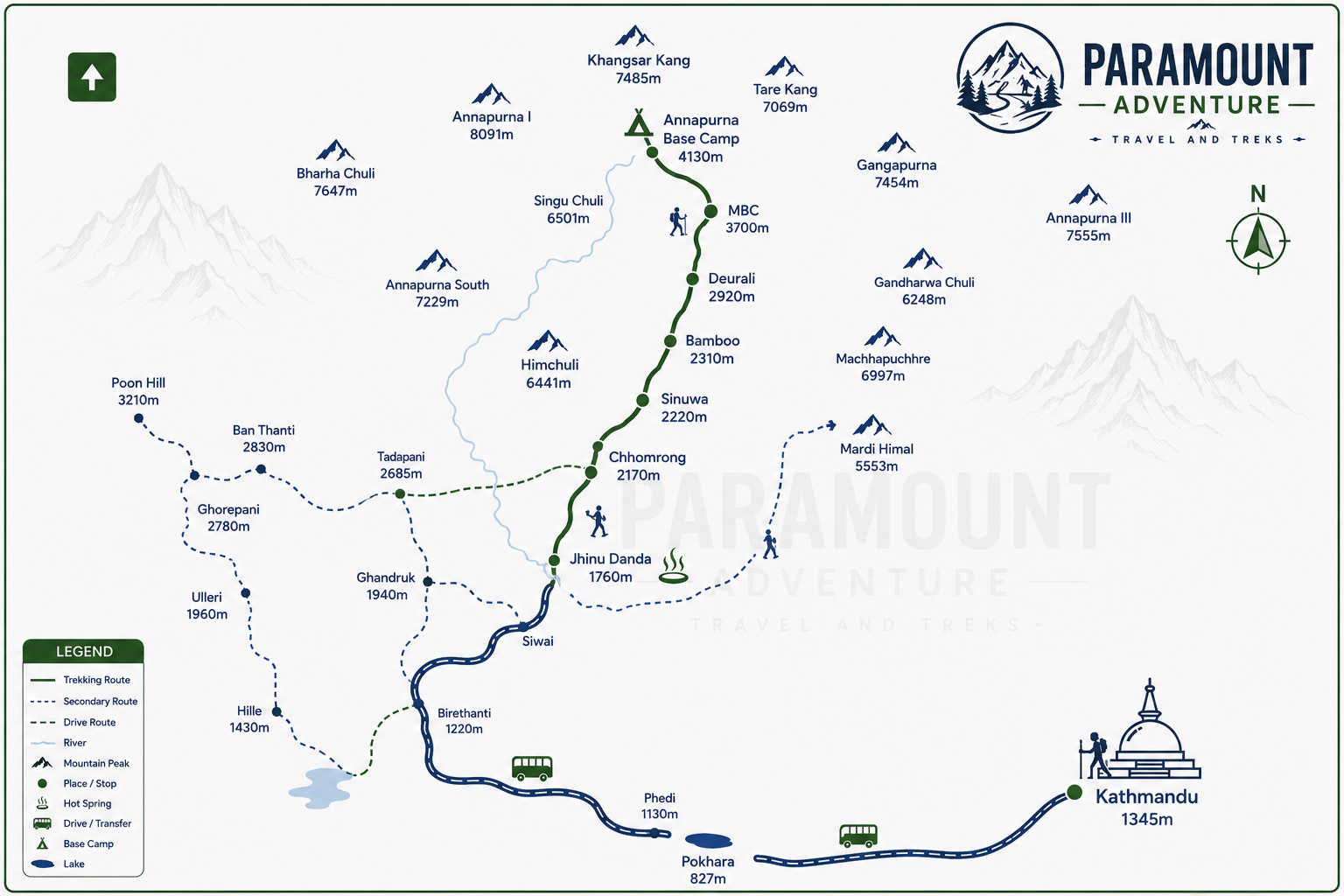
Map & Route

Route map for 6 Day Annapurna Basecamp Trek
Click to enlarge

Trip Info

Duration 5 Night 6 Days
Difficulty Moderate
Best Season Spring (Mar–May), Autumn (Sep–Nov)
Location Nepal
Region Annapurna Region
Max Altitude 4,130 m (13,550 ft)
Group Size 2–12 persons
Accommodation Teahouse
Transportation Private/Shared Tourist Vehicle
Permit Required trekking permits include the Annapurna Conservation Area Permit (ACAP) and applicable trekking registration/TIMS requirements. Permits are arranged by the trekking agency as part of the package.

Packing Checklist 0 / 51 Packed

Head & Face

0/6

Upper Body

0/7

Handwear

0/3

Lower Body

0/6

Footwear

0/6

Backpack / Other Gears

0/5

Electronics

0/4

Toiletries

0/7

Medications

0/4

Optional Items

0/3

Cost & Dates

Group Pricing

Group Size Price / Person
1 person USD 480
2 persons USD 420
3 – 6 persons USD 390
7 – 20 persons USD 360

Rates & Breakdown: 6 -Day ABC Trek

Full Board Package

USD 80 / per person

Includes a licensed guide, required permits, tea house lodging, transportation, along with all daily meals (breakfast, lunch, dinner) and tea or coffee.

Half Board Package

USD 60 / per person

Covers your guide, permits, tea house lodging, morning tea, and transportation. Lunch and dinner are purchased out-of-pocket on the trail, giving you control over meal choices.

Individual Services

Licensed English-Speaking Guide Includes the guide's insurance and daily expenses. $28 / per day
Porter Porter service for carrying trekking luggage. $22 / per day
ACAP Entry Permit Annapurna Conservation Area entry permit. $25 / per day
Daily Meals (Trailside) Approximately $30 per day, based on an average of $10 per meal. $30 / per day

Frequently Asked Questions

Trip Info & FAQs for 6 Day Annapurna Basecamp Trek

General Information

Paramount Treks makes your Annapurna Base Camp journey easier with trained and licensed local guides who give priority to your safety, comfort, and overall trekking experience. We handle important arrangements such as permits, transportation, route planning, and trip support, allowing you to enjoy the mountain scenery without worrying about the small details. Our flexible approach also helps us adjust the trek according to the needs of our travellers.
The trek reaches its highest point at Annapurna Base Camp, approximately 4,130 meters (13,550 feet) above sea level. From here, trekkers get an incredible view of the surrounding Himalayan peaks, including Annapurna South, Machapuchare (Fishtail), Gangapurna, and other snow-covered mountains of the Annapurna Sanctuary.
The Annapurna Base Camp route lies within Nepal's Annapurna Conservation Area. The trail travels through mountain settlements, forests, and changing landscapes before entering the Annapurna Sanctuary. Along the way, trekkers can experience the traditional lifestyle of Gurung and Magar communities while gradually moving toward the high-altitude base camp.
Daily trekking distance varies according to the route, terrain, and overnight stop. On average, trekkers can expect to cover around 8–14 km (5–9 miles) per day, with walking generally taking about 4–7 hours. Some days may feel easier, while others involve longer climbs or descents.
Absolutely. The journey combines impressive Himalayan scenery with a variety of landscapes and local experiences. Along the trail, you can see peaks such as Annapurna I, Machapuchare (Fishtail), Hiunchuli, and Gangapurna, while walking through rhododendron forests and traditional Magar and Gurung villages. The natural hot springs along the route are another highlight, and reaching Annapurna Base Camp offers a memorable 360-degree mountain panorama.

Accommodation

During the Annapurna Base Camp Trek, accommodation is mainly provided in local teahouses and mountain lodges located along the route, including places such as Chhomrong, Himalaya, Annapurna Base Camp, and Jhinu Danda. Rooms are generally basic and may include twin-sharing beds, blankets, and shared bathrooms. Teahouses also have common dining areas where trekkers can relax and have their meals. During busy periods, rooms at higher elevations can be limited, and sharing with 3–4 trekkers may sometimes be necessary.
Yes. The teahouses along the ABC route are generally simple, welcoming, and suitable for trekkers. Many are family-operated and have been serving visitors for years. Basic facilities are available, although comfort can vary depending on the location and altitude. At higher places such as Himalaya and Annapurna Base Camp, temperatures can become quite cold, so carrying a suitable sleeping bag is recommended.
Hot showers are available at many teahouses, usually for an additional charge of around 300–600 NPR (approximately $2–4 USD). Availability and pricing can vary depending on the location. In lower villages such as Chhomrong, gas or attached showers may be available at a lower cost or sometimes without an extra charge. At higher elevations, including ABC, facilities are more basic and bucket showers may be the main option. During colder weather, wet wipes can be a practical alternative to frequent showers.
Wi-Fi is available at many teahouses, generally for an additional fee of around 300–500 NPR ($2–3 USD). As you move toward higher elevations, particularly around Machhapuchhre Base Camp (MBC) and Annapurna Base Camp (ABC), connectivity becomes less reliable and may not be available at all. Where Wi-Fi is available, the connection can also be slow, so it is better not to rely on it throughout the trek.
Mobile connectivity is available in several parts of the Annapurna Base Camp route, especially around settlements such as Nayapul, Sinuwa, Bamboo, Deurali, and Jhinu Danda. However, coverage is not consistent everywhere. Signal can become weak or disappear completely in narrow valleys and remote sections, particularly as you travel deeper into the Annapurna Sanctuary and reach higher elevations.
Most teahouse bedrooms do not have individual heating. However, many lodges have a shared dining area with a central stove or fireplace where trekkers can warm themselves, especially during the evening. We recommend carrying warm layers and a good sleeping bag for comfortable nights. A sleeping bag can also be provided for the trek if required.

Food and Drinks

Three meals are provided each day at local teahouses along the route. Meals generally include Nepali, Tibetan, and simple Western options. Breakfast and dinner are usually served at the overnight lodge, while lunch is taken along the trail. Popular choices include dal bhat, noodles, fried rice, pasta, momo, soup, potatoes, porridge, Tibetan bread, pancakes, and eggs. Food choices may become more limited at higher elevations.
Water should be consumed only after it has been properly treated or boiled. Avoid drinking directly from taps, springs, or streams without treatment. Trekkers can use a water filter or purification tablets, or purchase bottled water along the route. Bottled water generally becomes more expensive at higher elevations. Carrying a reusable bottle or thermos with a capacity of around 1–2 litres is recommended.
Yes. Most teahouses along the ABC route sell basic snacks and drinks. Lower sections, including Ulleri and Jhinu Danda, generally have more choices such as chocolates, biscuits, chips, soft drinks, and energy bars. Options become more limited around Bamboo and ABC, where basic snacks, bottled water, and tea or coffee are more common. Local items such as chiura and dried fruits may also be available.

Guide and Porter

Yes. The guides are described as government-licensed professionals with experience in the Annapurna region. They have training in wilderness first aid and high-altitude trekking and can communicate in English. Some also have additional climbing experience.
The guides have extensive experience in the Annapurna region and are trained in areas such as altitude sickness management, first aid, weather awareness, route navigation, and emergency response. The provided information states that they have more than 10 years of trekking experience and have led Annapurna Base Camp treks in different seasons and trail conditions.
The guides are fluent in English and Nepali and are accustomed to communicating with international trekkers. Depending on the guide and assignment, some may also speak additional languages such as Hindi, Spanish, or Japanese.

Weather

Spring, from March to May, and autumn, from September to November, are generally the most suitable periods for the Annapurna Base Camp Trek. These months usually bring better visibility, more stable conditions, and comfortable trekking temperatures. Spring adds blooming rhododendrons to the lower trails, while autumn often offers crisp skies and excellent mountain views. Winter can be snowy and cold, while the monsoon season may bring rain, muddy trails, and reduced visibility.
Temperatures vary considerably depending on altitude and season. In lower villages such as Ulleri and Ghorepani, daytime temperatures are generally around 15–20°C, while nights can fall to approximately 5–10°C. At Annapurna Base Camp, daytime temperatures can remain around 0–10°C, with nighttime temperatures potentially dropping below -10°C, particularly during winter and early spring. Warm layers, a down jacket, gloves, a hat, and a suitable sleeping bag are recommended.
Weather can influence trail conditions, visibility, and overall trekking comfort. Spring and autumn generally provide drier trails and clearer mountain views. During winter, snow and ice can make some sections slippery and slower to cross, while monsoon rainfall can result in wet and muddy paths with limited visibility. At higher elevations, weather can also change quickly, so trekkers should remain prepared for sudden changes.

Visa & Insurance

Your travel insurance should provide coverage suitable for trekking up to Annapurna Base Camp at 4,130 m (13,550 ft). The policy should ideally include:

Helicopter evacuation
High-altitude medical treatment
Emergency medical rescue
Trip cancellation or interruption
Accident and injury treatment
Hospitalization and medicines
No. Travel insurance is not included in the Annapurna Base Camp Trek package. Travellers should arrange suitable insurance separately before arriving in Nepal. Make sure the policy specifically covers trekking at the maximum altitude of the trek, as some standard travel insurance policies have altitude restrictions.
Most foreign travellers require a Nepal tourist visa, while Indian citizens are exempt from this requirement. Foreign visitors generally need a passport with at least six months of validity and the required visa documents and fees.

A tourist visa can generally be obtained through visa-on-arrival facilities at Tribhuvan International Airport in Kathmandu or designated border entry points, or through a Nepalese embassy/consulate before travelling.
For an 11-day Annapurna Base Camp Trek, a 15-day Nepal tourist visa may be enough if your travel schedule is fixed. However, choosing a 30-day visa gives you more flexibility in case of flight delays, itinerary changes, or if you plan to stay in Nepal for a few extra days before or after the trek. The source content states that a 30-day visa typically costs around $50 USD.

Equipment

Trekking poles are highly recommended as they can reduce pressure on your knees and provide better balance, particularly on the steep stone steps around Sinuwa and during the descent toward Jhinu Danda. Crampons or microspikes are generally only necessary for winter trekking, especially from December to February, when snow or ice may be present on the trail. If required, these can be rented in Pokhara or Kathmandu.
Choose sturdy, waterproof trekking boots with good ankle support and reliable grip. Avoid wearing completely new boots on the trek, as they should be properly broken in beforehand to reduce the risk of blisters. A slightly larger fit can also be useful when wearing thick trekking socks, especially during long walking days.
Pack clothing that can be layered according to changing temperatures and altitude. Useful items include thermal wear, fleece layers, a down jacket, comfortable trekking trousers, insulating layers, and waterproof outerwear. You should also carry waterproof trekking boots, gloves, a warm hat, sunglasses, sunscreen, a sleeping bag, headlamp, reusable water bottle (1–2 litres), toiletries, personal medicines, and important documents such as your passport and trekking permits.

Health and Safety

The Annapurna Base Camp Trek is generally considered manageable when following a properly planned itinerary and travelling with an experienced, licensed guide. The route has established trails, regular trekking activity, and teahouses along the way. The main concerns are altitude-related illness and the more challenging terrain between Deurali and Machhapuchhre Base Camp. Proper pacing and guidance can help manage these risks.
The itinerary is planned with gradual elevation gains to allow your body time to adjust. Guides can monitor trekkers for signs of altitude sickness and overall well-being throughout the journey. Diamox (acetazolamide) may be used for altitude sickness when recommended by a qualified medical professional. If serious symptoms appear, the trek should be adjusted and appropriate emergency assistance arranged.
You will be accompanied by licensed guides familiar with the Annapurna region and local trail conditions. The itinerary may be adjusted according to your health, group pace, weather, and trail conditions.

Trekkers should also maintain good hydration, get sufficient rest, dress appropriately for the weather, and eat nutritious meals. The source recommends around 3–4 litres of warm water per day, approximately 6–7 hours of sleep, and avoiding alcohol and smoking during the trek.

Payment

You can make a booking by completing the online booking form or by contacting the team through email, phone, or WhatsApp. Once your travel details are confirmed and the required 10% deposit has been received, your booking will be secured. You will then be asked to provide the necessary documents, after which the team will share the information and preparations needed for your trek.
Several payment options are available, including local or international bank transfers, Visa, AMEX, Mastercard, debit cards, Wise, Western Union, and secure online payment through the website. Payments can also be made in USD cash upon arrival in Kathmandu. The exact payment instructions will be provided during the booking process.
Although the trek package covers most of the main services, travellers should keep some extra budget for personal expenses. These may include Nepal visa fees, suitable travel insurance, tips for guides and porters, snacks, drinks, hot showers, drinking water, souvenirs, and equipment rentals.
Around $15–$20 USD per day (approximately 2,500–3,000 NPR) should generally be sufficient for personal expenses during the trek. This can cover items such as drinks, snacks, Wi-Fi, charging, hot showers, and tips. Since ATMs may not be readily available along much of the route, it is advisable to withdraw or exchange enough cash in Kathmandu or Pokhara and carry smaller denominations such as 20, 50, 100, or 500 NPR

Reviews

Mohit Agarwal

Mohit Agarwal

Verified booking

UK

My Annapurna Base Camp trek with Paramount Adventure was an unforgettable experience. Everything was planned perfectly, and our guide made the journey even more enjoyable with his knowledge and friendly nature. The stunning mountain views, safe arrangements, and comfortable experience made this trek truly special. I would definitely recommend Paramount Adventure to anyone looking for an amazing trekking experience in Nepal.

Sep 2026

6 Day Annapurna Basecamp Trek
Package Info Payment

Select your dates

Number of Travellers

1
Travellers

USD 480 per person

Tier: Default

Buyer information

Customize your trip

Select add-ons for specific participants.

Secure Checkout

Review your booking and select a payment method.

Billing Information

Who should the invoice/receipt be issued to?

Payment Schedule

Payment Method

A 10% deposit confirms your booking — we'll send bank transfer or payment link instructions by email right after you submit.

Amount Due Now *Rates updated daily
USD 480