
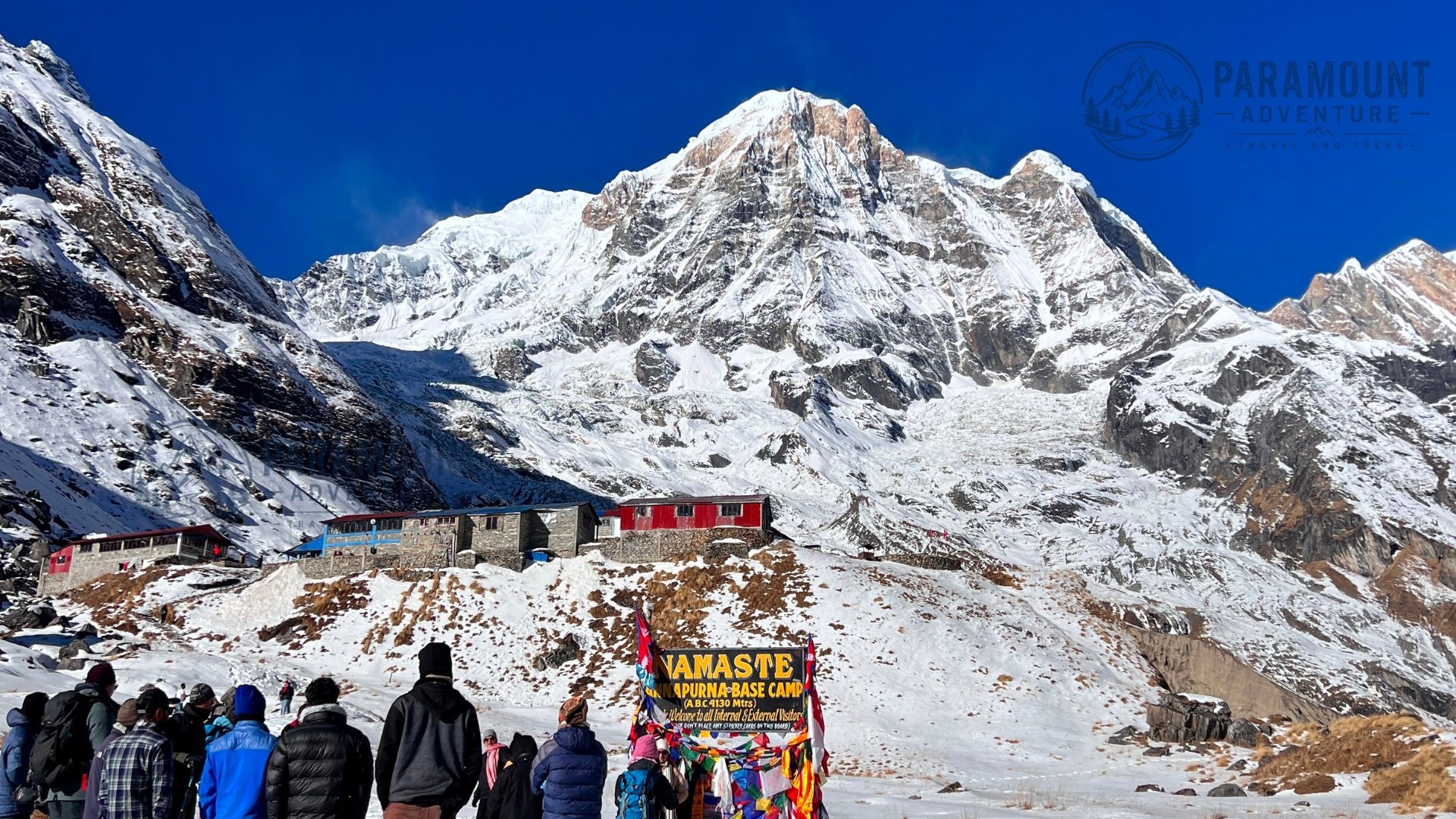
Nepal's monsoon-season weather systems are back in the news this week, with multiple government bodies and trekking authorities issuing coordinated warnings ahead of a spell of heavy to extremely heavy rainfall expected across the country from September 24 to 28, 2026 (Ashwin 8–12, 2083 B.S.). If you're currently trekking in Nepal, have a trip booked in the coming days, or are planning one for later this season, here's a full breakdown of what's been announced, which regions are affected, and what it means for your trek.
What the Weather Forecast Says
Nepal's Department of Hydrology and Meteorology (DHM) has forecast a spell of heavy to extremely heavy rainfall affecting Gandaki, Lumbini, Bagmati, and Koshi provinces, with the heaviest impact expected between September 25 and 27 (Ashwin 9–11). The system brings a real risk of thunderstorms, lightning, and strong winds, and in the high mountains, the same weather pattern is expected to bring significant snowfall.
Because of the combination of intense rain in the lowlands and mid-hills and heavy snow at altitude, authorities are flagging a genuinely elevated risk of landslides, flash floods, and river overflow — with knock-on effects for trekking trails, roads, and even domestic flights.
TAAN's Nationwide and Regional Advisories
The Trekking Agencies' Association of Nepal (TAAN) has issued advisories at both the national and regional level:
- TAAN Gandaki (Pokhara) issued a formal notice on Ashwin 7 (September 23) specifically warning that heavy rain and cloudburst-driven flooding could hit many areas across Gandaki, Lumbini, Bagmati, and Koshi provinces from September 25–27. The notice asks all member trekking agencies not to send new groups into risk-prone trekking areas during this window, to reconsider pre-set itineraries, and to keep all currently active guides and porters away from riverbanks, landslide-prone slopes, and flood-vulnerable areas. Agencies are also asked to stay in regular contact with the TAAN Gandaki secretariat, local administrations, ACAP, and Tourist Police in case of emergencies.
- TAAN's national office urged trekking agencies and tourists to exercise high caution and avoid trekking and adventure activities from September 24 to 27 amid forecasts of heavy to extremely heavy rainfall across the country. The association warned that the rain could raise water levels in rivers and streams and trigger flash floods, landslides and inundation, with the potential to disrupt trekking routes, roads and air services.
- Agencies have been asked to keep trekkers and support staff away from riverbanks, steep slopes, and other flood- or landslide-prone areas, and to hold off on mountaineering and other adventure activities until conditions improve. TAAN says its secretariat is coordinating closely with the Nepal Tourism Board, Tourist Police, local governments in high-risk districts, and protected-area authorities to arrange search, rescue, and medical support if needed.
Annapurna and Manaslu Conservation Areas: Permits Paused
The National Trust for Nature Conservation / Annapurna Conservation Area Project (ACAP) issued an urgent notice confirming the same September 24–28 rainfall window, and as a direct precaution has asked all offices and checkpoints not to issue new entry permits for the Annapurna Conservation Area (ACA) or Manaslu Conservation Area (MCA) from September 24 to 26, until further notice. This effectively pauses new permit issuance for popular routes like the Annapurna Circuit, Annapurna Base Camp, and the Manaslu Circuit during the highest-risk days, though it's a rolling notice that could be extended or lifted depending on how the weather develops.
Manang District: High-Altitude Routes Fully Closed
Taking things a step further, the Manang District Administration Office has issued its own three-day suspension, closing trekking in the district's high-altitude regions due to the risk of heavy rainfall and snowfall, effective from Friday to Sunday (September 25–27).
Trekking has been explicitly prohibited in areas including Tilicho Lake, Thorong La Pass, Ice Lake, Kang La Pass, and Bhimthang some of the most iconic sections of the Annapurna Circuit and Annapurna region. Movement in these areas has been fully restricted due to the elevated risk of weather-related disasters, and both domestic and international trekkers currently on the trail have been asked to move to safe locations or nearby hotels/lodges and hold off until conditions improve, following instructions from local security agencies.
Bagmati Province Also on High Alert
It isn't just the mountain districts. Bagmati Province's Ministry of Internal Affairs, Law and Cooperatives has also issued a public notice urging residents and travelers to stay alert for heavy rainfall accompanied by thunderstorms, lightning, and strong winds between Ashwin 9 and 11 (September 25–27). This matters for anyone transiting through the Kathmandu Valley on the way to or from a trek, since the ministry has cautioned that the rain could affect both road and air transportation, and has advised travelers to check road and weather conditions before setting out. People planning long-distance or nighttime travel during this period have been specifically advised to avoid it unless absolutely necessary.
What This Means Region by Region
- Annapurna region (ABC, Annapurna Circuit, Ghorepani-Poon Hill, Mardi Himal): New ACA permits paused Sept 24–26; high-altitude sections in Manang fully closed Sept 25–27.
- Manaslu region: New MCA permits paused Sept 24–26; TAAN advises against new departures through the same window.
- Langtang, Helambu, and other Bagmati-province routes: No formal trail closures yet, but Bagmati Province itself is under a heavy-rain and landslide alert for Sept 25–27, with road and flight disruptions possible.
- Everest (Khumbu), Kanchenjunga, and other Koshi-province routes: Flagged in the DHM forecast and TAAN's national notice as being within the affected provinces; no district-level trail closure has been reported yet, but caution and close monitoring are advised.
- Kathmandu Valley and transit routes: Not closed, but expect possible flight delays, road obstructions, and heightened flood/landslide risk, especially at night.
What Trekkers Should Do Right Now
If you're currently on a trek in Nepal:
- Stay in close contact with your guide or agency and follow their instructions exactly if you're told to hold at a lodge or teahouse rather than push on to the next stage, do it.
- Avoid riverbanks, landslide-prone slopes, and known flood-vulnerable stretches of trail.
- Keep your phone charged and know the emergency numbers below.
If you have a trek booked in the next week:
- Speak with your trekking operator about your specific route and start date , some itineraries may need to shift by a few days rather than being cancelled outright.
- Build in flexibility around your start date if you can, since these notices are being reissued and updated as the forecast evolves.
- Don't be discouraged from trekking in Nepal generally , this is a short, defined weather window, not a season-long closure, and conditions are expected to improve after September 28.
If you're planning a trip later this season:
- This kind of short-term advisory is a normal part of Nepal's late-monsoon/early-autumn transition and doesn't reflect on trail conditions once the system clears. Reputable operators build weather contingency into their itineraries for exactly this reason.
Useful Emergency Contacts
- Weather updates (DHM): 1155
- Disaster assistance: 1234
- Nepal Police: 100
- Tourist Police: 1144
A Note from Paramount Adventure Travel and Treks
We're monitoring this situation closely and staying in direct contact with TAAN, ACAP, and local authorities across our operating regions. If you have a trek scheduled with us during this window, we'll be reaching out directly with route-specific guidance , and if you're still planning a Nepal trek this season, our team is happy to help you time your departure around this system so you get the trail, not the storm.

Comments (0)
Leave a Comment